
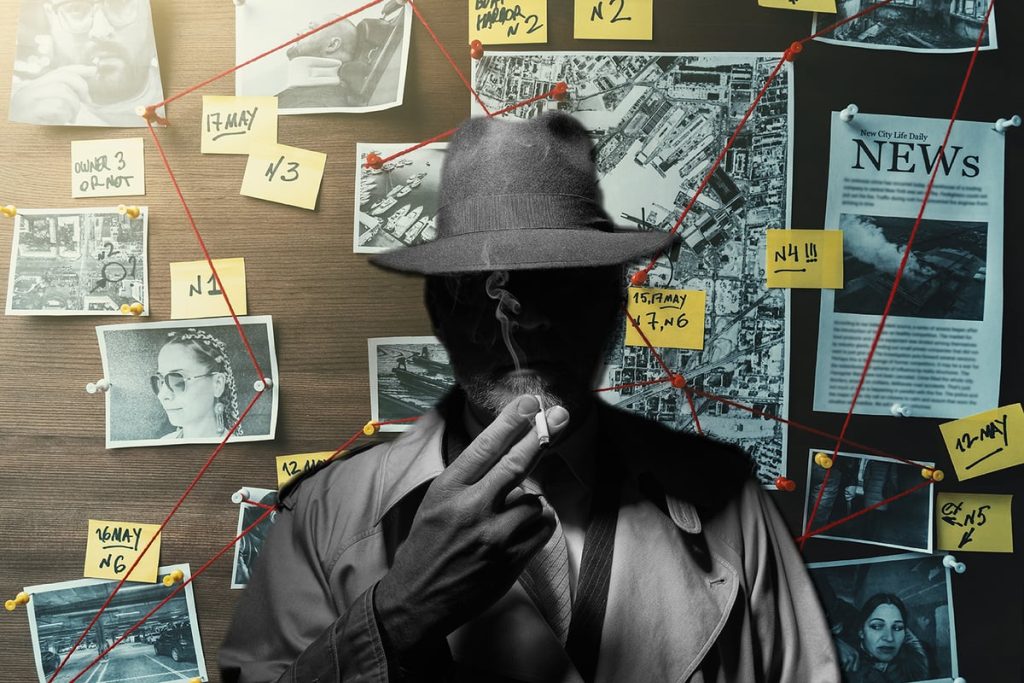
Every legendary heist begins long before a vault opens or a jewel disappears. It begins in the mind of someone who dares to imagine the impossible. The thrill of a perfect crime is not only about the object taken or the place it is stolen from. It is about the careful thinking, patience, and mental discipline that make such an act possible. When readers encounter a story about a daring theft, what truly captivates them is not the crime itself but the intelligence behind it. In Louver Heist, author Khosrow Motalaby takes readers deep into this psychological world. The story begins with a bold plan to infiltrate one of the most secure locations in the world—the Louvre Museum in Paris. An elite team attempts to steal France’s legendary Crown Jewels in a carefully timed operation that lasts only seven minutes. What appears to be a simple jewel theft quickly reveals something far more complex. It becomes a story about strategy, human psychology, and the power of knowledge hidden within history.
The focus of the story is Arman Navid, a man who is not driven by greed but by understanding. Unlike the typical image of a thief, Arman is a gemologist, someone who studies precious stones and understands the deep histories they carry. Standing before the Regent Diamond in the Louvre’s Galerie d’Apollon, he does not see only wealth. He sees centuries of power, conflict, and legacy embedded in the facets of the stone. The diamond once adorned Napoleon’s coronation sword, making it more than a jewel. It is a symbol of history itself. For Arman, the heist is not only about stealing treasure. It is about creating something unforgettable. At one point in the narrative, he reflects on the idea that the act itself can become a form of creation rather than destruction. In his mind, the heist is a statement—an act that will echo through history and force people to question the systems they trust. This perspective reveals an important psychological element. The most fascinating criminals in fiction are often not motivated by money alone. They are driven by ideas. In Louver Heist, the operation becomes a challenge against systems of control and power. Arman’s team studies the museum not as burglars looking for weaknesses but as strategists examining a complex machine.
The psychology of preparation is one of the most powerful elements of the story. The team spends weeks analyzing the Louvre’s security systems, studying every camera angle, every sensor, and every routine. They understand that modern security does not rely on a single defense but on layers of protection. Cameras, acoustic sensors, and environmental monitoring systems all work together to guard the priceless artifacts within the museum. Instead of trying to overpower these defenses, the team studies their patterns. They discover that even the most sophisticated systems must occasionally reset or recalibrate. During a shift change in the security network, there is a brief moment when systems transition from one state to another. This tiny disruption becomes the opening they need. For exactly 420 seconds—seven minutes—the system falls slightly out of sync. This moment highlights the true psychology behind the perfect heist. Success does not come from force but from understanding how systems behave. The characters in the story know that every complex system has a moment of vulnerability. By observing carefully and acting at the right time, they turn a small weakness into a decisive advantage.
Another psychological element discovered in the novel is the importance of teamwork. Each member of the group contributes a unique skill that makes the operation possible. Mara handles the physical infiltration, using her agility to access parts of the building that others cannot reach. Noor works as the technological strategist, analyzing security networks and mapping camera blind spots. Vesper creates replicas of the jewels so convincing that they can deceive both human observers and automated systems. Émile, the insider within the museum, provides access to the infrastructure that allows the plan to be revealed. Together, they form a system of their own, mirroring the complexity of the security they intend to bypass. Their success depends not on individual brilliance alone but on coordination and trust. Yet even the most careful planning cannot eliminate uncertainty. One of the most revealing moments in the book occurs during a rehearsal before the heist. The team practices the operation in a warehouse designed to replicate the conditions of the museum. During the dry run, a small mistake occurs when a replica jewel slips slightly from its mount. For forty-two seconds, the team freezes in complete silence, realizing that such a tiny error could trigger detection in the real vault.
Those seconds reveal the psychological pressure of the operation. In high-risk situations, the difference between success and failure often lies in the ability to remain calm. The team corrects the mistake and continues refining the plan, but the moment leaves a lasting impression. It shows how fragile perfection can be. think differently. Louver Heist captures this fascination with remarkable clarity. Through its characters and its intricate plot, the novel shows that the psychology of a perfect heist is not about reckless action. It is about observation, discipline, and the courage to think differently.
Subscribe to Newsletter
Want to know what drives the mind of a market-obsessed character? Curious what Khosrow (Hoss) Motalaby is writing next?
Subscribe to the newsletter and be the first to get exclusive excerpts, author notes and commentary, special offers and early access to new books, and insights into the psychology behind The High/Low.
